
Carnival music rights: who collects the money
Every soca track played at a fete needs a licence, and Trinidad has two music collecting societies. How royalties flow and where creators lose out.
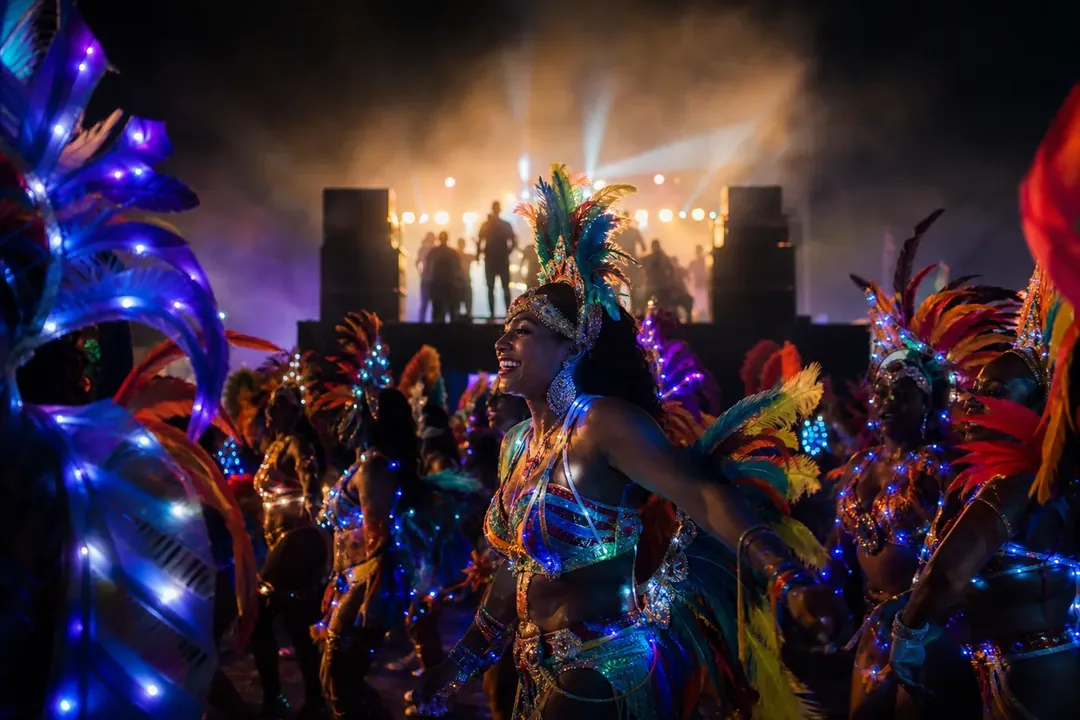
Every song played at a Carnival fete, on a music truck or in a TV ad belongs to someone, and using it legally needs a licence. That licence money is how songwriters, singers and producers get paid long after the season ends.
When promoters or brands skip it, they risk legal action. When creators don't register their songs, the money never finds them.
One song, several owners
A single soca track usually involves more than one set of rights:
| Right | What it covers | Who usually owns it |
|---|---|---|
| The song | Melody and lyrics | Songwriters and their publishers |
| The recording | The specific recorded version, called the master | The label, producer or self-released artist |
| Public performance | Playing it at fetes, on radio, in shops and hotels | Collected by a society for the songwriters |
| Synchronisation | Putting it in an ad, film or video | Needs permission from both song and recording owners |
Collecting societies are member organisations that license music on behalf of creators and pass the fees back to them. They mostly handle the song side. Permission for the recording itself often has to come from the label or artist separately.
Trinidad and Tobago has two music societies
Trinidad and Tobago's Intellectual Property Office reminds promoters that there are two collecting societies for music: the Copyright Music Organisation of Trinidad and Tobago (COTT) and the Trinidad and Tobago Copyright Collection Organisation (TTCO). Each represents different artists.
That means a promoter may need a licence from both, depending on whose music is played. The office also warns that a separate licence may be needed for the rights of performers and record producers. Using music without permission is copyright infringement under the Copyright Act.
What COTT licenses
COTT's media licensing page lists the main licences it issues:
- Event and business licences for fetes, venues and shops.
- Broadcast licences for radio, TV and cable, which also require stations to report what they played.
- Mechanical licences for making copies of a song on CD or as downloads.
- Synchronisation licences for film, TV and advertising.
- Online licences for streaming services operating in Trinidad and Tobago.
COTT notes that for online use, you also need permission from whoever owns the master recording.
Elsewhere in the region
Each country has its own society rather than one regional body.
In Jamaica, the Jamaica Association of Composers, Authors and Publishers (JACAP) licenses concerts, clubs, hotels, shops and broadcasters.
In Barbados, the Copyright Society of Composers, Authors and Publishers (COSCAP) signed a deal in January 2024 to collect more of its members' money abroad. Canada's CMRRA now handles their copying royalties in Canada, and SX Works collects online royalties from the United States.
Societies also sign agreements with each other, so a Trinidadian song played on Jamaican radio can still pay its writer. That process is slow, and it only works if the song is registered.
Where the money leaks
Caribbean music earns a lot of its money abroad, at Notting Hill, Caribana, Labor Day in Brooklyn and Miami Carnival. Creators lose out when:
- Songs are never registered with a society.
- Writer splits between singer, producer and songwriter are never written down.
- Nobody can be reached to approve an ad or film use quickly, so the buyer picks another track.
- An artist accepts a one-off payment that gives away all future royalties.
Ad agencies often need permission within days. A song can win the Road March and still lose an international ad deal because no one can confirm who owns what.
Booking apps help, but don't collect
New tools are helping musicians find work. GigLink, which won Techstars Startup Weekend Port of Spain in August 2026, helps musicians find clients and manage bookings. Our GigLink post has more.
Tools like these help with the gig side. They do not collect radio, streaming or ad royalties, so registering with a society still matters.
What to do
- Promoters: budget for licences from COTT, TTCO or both before the season, and keep your playlists.
- Brands and agencies: clear the song and the recording before the creative is final, not after it airs.
- Artists and producers: register every song, write down splits before the track is released, and join a society.
What to watch
Watch whether Caribbean societies speed up licensing for ads and online use. Watch how livestreamed fetes and events are licensed as more of them sell streams. And watch whether booking platforms like GigLink start linking to society registration, so musicians get paid on both sides.