
Why Trinidad still powers Caribbean industry
Gas, LNG, Point Lisas and a gas-fired grid make Trinidad and Tobago the region's industrial base. Supply is tight, and new fields are due from 2027.
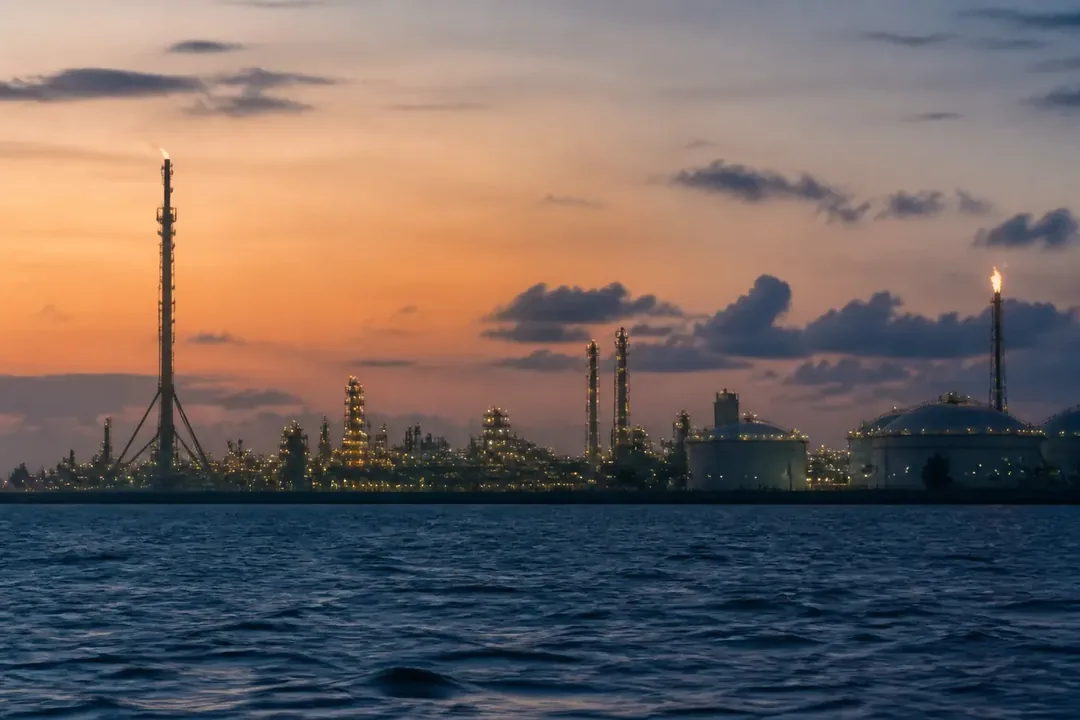
Trinidad and Tobago is still the Caribbean's industrial heavyweight, built on natural gas that feeds an export LNG plant, a petrochemical estate and a national power grid. But there is not enough gas to go around right now, and in 2026 that shortage pushed a methanol plant to shut and one LNG unit toward removal.
For any business in the region, this matters beyond oil and gas. Gas is what keeps Trinidad's electricity relatively cheap and steady, and that underpins factories, cold storage, call centres and studios.
How the model works
Most Caribbean islands import fuel and burn diesel to make electricity. Trinidad and Tobago took a different path: use its own gas at home, sell the surplus abroad as liquefied natural gas (LNG), and turn the rest into chemicals such as ammonia and methanol at Point Lisas.
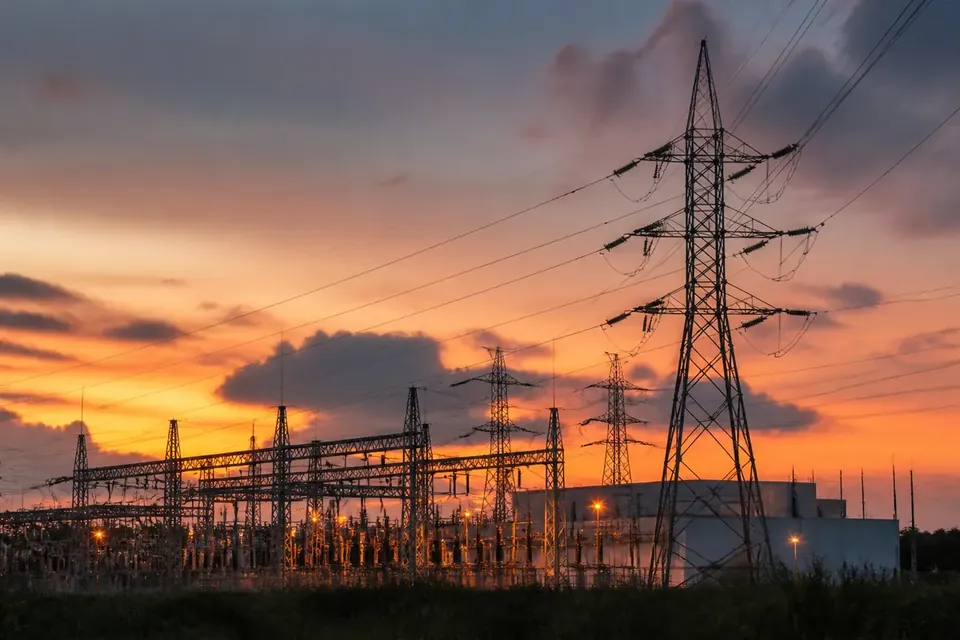
Electricity comes almost entirely from gas. The state utility T&TEC runs a single national grid, while independent power producers generate the bulk power (Ministry of Energy).
Atlantic LNG: running below capacity
Atlantic LNG at Point Fortin is the country's biggest gas buyer and one of the largest LNG plants in Latin America. It is owned 45% by BP, 45% by Shell and 10% by the state's National Gas Company (NGC) (Trinidad Express).
Output rose about 5.8% in 2025, the first increase since 2022, according to the Energy Chamber, using Ministry of Energy data. That still left production at about 17.6 million cubic metres, well below the roughly 29 million of 2015.
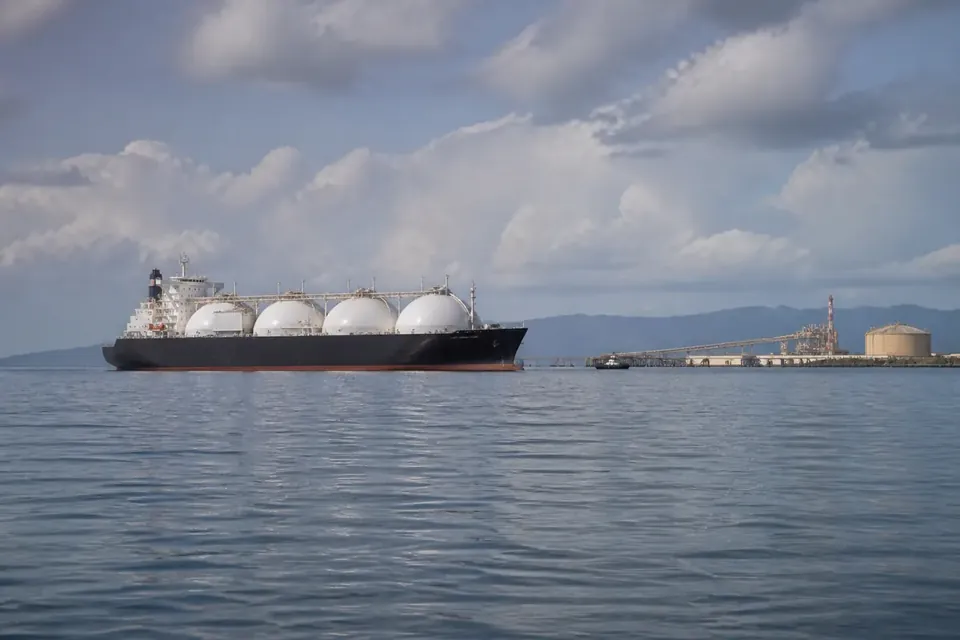
The plant can make about 12 million tonnes a year but exported around 9 million in 2025 because there was not enough gas. Train 1, one of its four processing units, has been idle since 2020. In January 2026, the shareholders agreed to begin removing it in the fourth quarter of the year (Reuters).
The commercial terms have also changed. After years of talks between the government, BP, Shell and NGC, Atlantic moved to a single shared ownership structure, and Reuters reported that revised contracts raised government income from LNG sales.
New gas is coming, mostly from 2027
Several new fields are due to start over the next two years (Energy Chamber):
| Project | Operator | Expected | Peak output |
|---|---|---|---|
| Cypre Phase 1 | bpTT | On stream 2025 | 350 million cubic feet a day |
| Mento | bpTT and EOG | First gas after Cypre | 250 million cubic feet a day |
| Ginger, Coconut | bpTT, bpTT/EOG | 2027 | Not stated |
| Aphrodite | Shell | 2027 | 107 million cubic feet a day |
| Manatee | Shell | 2027 | About 1 billion cubic feet a day |
Manatee is the big one. Shell made its final investment decision in 2024 and has since raised expected output from 600 million to about 1 billion cubic feet a day.
In August 2026, Prime Minister Kamla Persad-Bissessar announced that BP had agreed to sell NGC a 20% stake in Manakin, the Trinidad side of the Manakin-Cocuina field shared with Venezuela (Trinidad Express). Reuters reported the field holds about one trillion cubic feet of gas, with 70% set for Atlantic LNG and 30% for petrochemicals. A final investment decision was expected by the end of 2026. She also said BP had bought out Woodside's share of the deep-water Calypso field.
Point Lisas: the petrochemical estate
The Point Lisas Industrial Estate, run by PLIPDECO, is the centre of the country's petrochemical industry (Ministry of Energy). It covers about 860 hectares with more than 100 tenants, including methanol, ammonia, urea, steel and power plants, alongside the Port of Point Lisas (Ministry of Works). Having gas, plants, power and a port in one place is something smaller islands cannot copy.
The problem is supply. In the first eleven months of 2025, LNG used nearly 47% of the country's gas, ammonia 19%, methanol 18.6% and power generation 11%, according to ministry data cited by BNamericas.
In June 2026, Methanex said it would idle its Titan methanol plant, joining its idle Atlas plant and Nutrien's shuttered facility. Thackwray Driver, who ran the Energy Chamber for 24 years, warned that if plants close before new gas arrives around 2028, "plants cannot be simply brought back into production with the flick of a switch."
There is some good news for the estate. In August the government signed an agreement with Pinnacle Steel and Vanadium to restore the former ISCOTT steel plant at Point Lisas.
Power: steadier than most islands
The power plants feeding the national grid, per the Ministry of Energy:
| Plant | Owner | Capacity |
|---|---|---|
| Point Lisas | Powergen | 838 MW |
| Union Estate, La Brea | Trinidad Generation Unlimited | 720 MW |
| Port of Spain | Powergen | 270 MW |
| Penal | Powergen | 236 MW |
| Point Lisas | Trinity Power | 225 MW |
| Cove, Tobago | T&TEC | 65.6 MW |
A review by the Energy for Growth Hub notes that Trinidad and Tobago has long had some of the lowest electricity prices in the Caribbean and Latin America. It also warns that relying on gas alone is a risk, and that low tariffs put financial pressure on T&TEC. The grid is not perfect: a transmission problem caused a nationwide blackout in April 2022.
What it means for other businesses
Reliable, fairly cheap power is part of why companies that run equipment around the clock, from cold chains to call centres to video studios, choose Trinidad as a base. The government is leaning into that. It signed agreements with two data centre companies in July 2026 and with Hummingbird AI Holdings in August, according to the Prime Minister.
Global Trinidad and Tobago, the investment agency formed in April 2025 from InvesTT, exporTT and CreativeTT, lists renewable energy, creative industries, agribusiness and maritime among its target sectors (UNCTAD).
All of this rests on gas. If supply stays tight, the trade-off between selling LNG abroad and keeping power and chemical plants supplied at home gets harder.
What to watch
- Whether Manatee and the other 2027 fields start on time.
- Which buyers get the new gas: Atlantic LNG, the Point Lisas plants or power generation.
- A final investment decision on Manakin-Cocuina, expected by the end of 2026.
- Whether Methanex restarts Titan or more Point Lisas plants close.
- Any change in electricity tariffs, which would affect every business on the grid.