
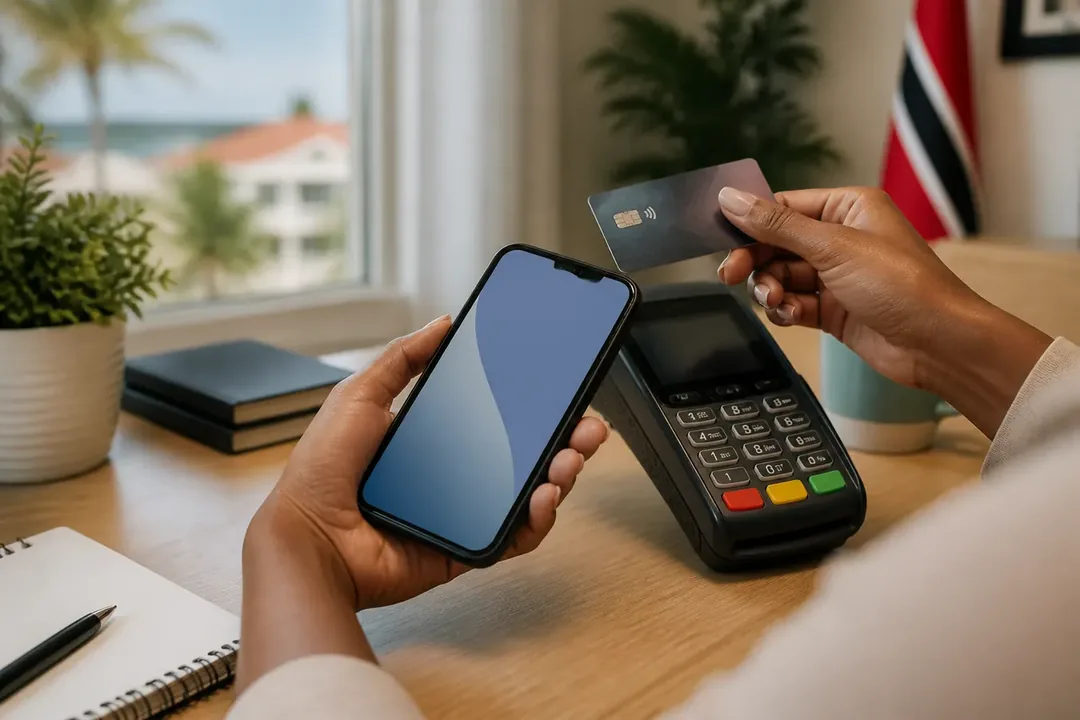
Wam: a Trinidad wallet built for checkout
Wam, a Central Bank-registered wallet from Trinidad, offers tap-to-phone, payment links and hosted checkout. What it costs, how it works and what to check.
In the Caribbean, more sales are lost at checkout than in the ad itself. Local cards get declined, wallets don't connect to online stores, and a deal agreed on WhatsApp often ends with "just send me a bank transfer." Wam, a Trinidad-built wallet registered with the Central Bank, wants to fix that with a simple hosted checkout businesses can plug in.
This post covers what Wam offers, what it charges, how its online checkout works and what a business owner should confirm before signing up.
Who is behind Wam
Wam is run by WamNow Technologies Limited in Trinidad and Tobago. The Central Bank of Trinidad and Tobago registered the company as an e-money issuer on 7 November 2025, after a provisional period, for its Wam wallet app (Central Bank notice). An e-money issuer is allowed to hold customer balances in a digital wallet.
Wam's business page goes further. It says Wam is "a licensed Electronic Money Institution and Payment Service Provider" and that card processing runs through Cybersource, a large global card processor (wam.money/business). The Central Bank's own list, dated 1 August 2026, shows WamNow as a registered e-money issuer but does not include it among registered payment service providers (Central Bank list). Under Trinidad's rules, the two registrations are separate, so it is worth asking Wam which licence covers the services you plan to use.
Other e-money issuers on the same list include PayWise, PESH, TSTT's PAYPR and Massy's WIDiT.
What a business gets
Wam pitches one app for taking payments, paying staff and keeping the books. The main features on its business page are:
| Feature | What it does |
|---|---|
| Tap-to-phone | Turns an NFC-enabled Android phone into a card reader for Linx, Visa, Mastercard, Apple Pay and Google Pay |
| Point of sale | Menus, table management, split bills and SMS receipts, with offline mode |
| Payment links | A link you send on WhatsApp for a set amount |
| Online checkout | Plugins for Shopify and WooCommerce, plus a developer kit for custom sites |
| Payroll and payouts | Pay staff and suppliers in TTD or USD from one upload |
| Foreign currency accounts | Settle in USD, EUR or GBP through partner banks |
Wam lists its card fee as a flat 3.0% plus TT$1.50 per card transaction, with no monthly fee or terminal rental. On a TT$200 sale, that works out to TT$7.50. Compare that with what your bank charges for a terminal before you switch.
Wam says the full business service is live in Trinidad and Tobago and "rolling out across the Caribbean." It points merchants to a coverage page to check what works in each country.
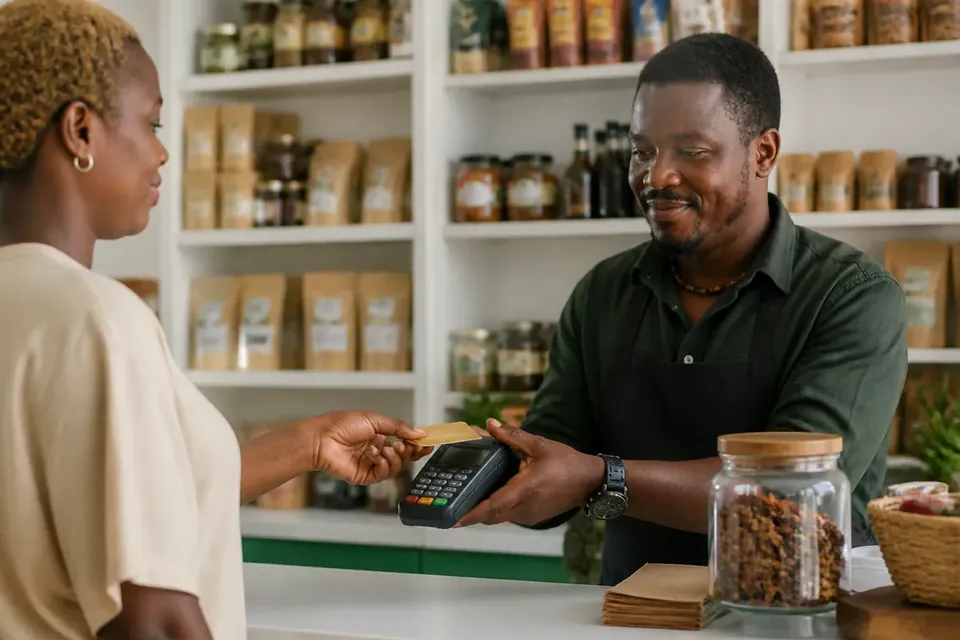
How hosted checkout works
A hosted checkout means the customer pays on Wam's secure page instead of your website, so you never handle card numbers yourself. Wam's developer documentation describes four steps:
- Your website asks Wam to create a "payment intent" with the amount, currency and order number.
- Wam sends back a link to its checkout page.
- The customer pays on that page by Wam wallet, card or QR code.
- Wam sends your server a signed message confirming payment, and the customer returns to your site.
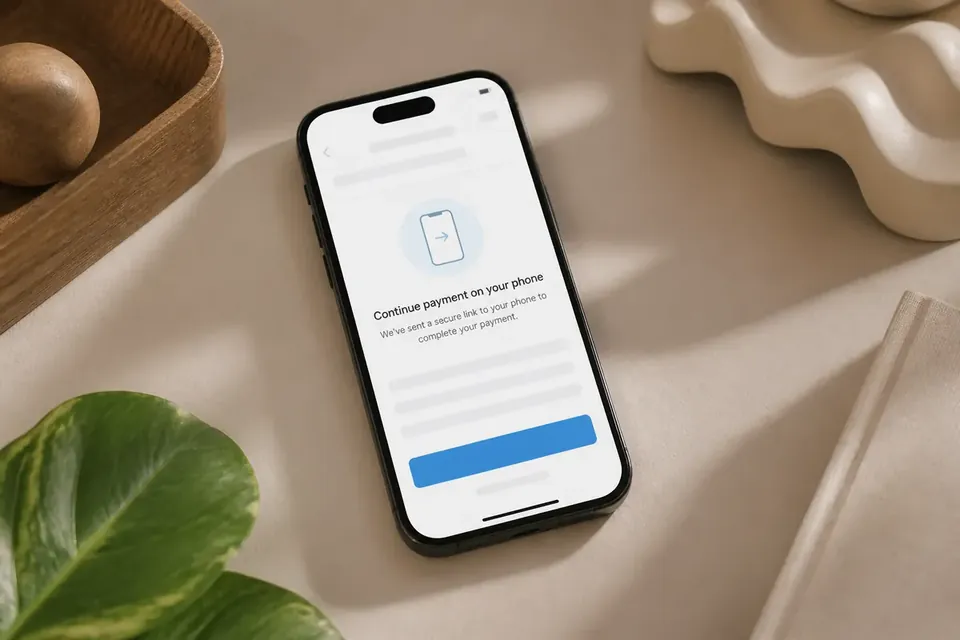
The documentation is firm on one point: only ship the order when that signed confirmation (a "webhook") arrives. The customer landing back on your site is not proof of payment, which matters when buyers on WhatsApp close the page halfway through.
To set it up you need a Wam Business account, API keys from the Business Portal and a secure web address to receive the confirmations. There is a test environment with separate keys. A Node.js kit is available now, and Python and PHP kits are listed as coming soon. A developer who has built a Stripe or PayPal integration should find the pattern familiar.
Where Wam fits among Caribbean payments
Wam is one of several ways Caribbean businesses are trying to get paid faster. Guyana announced Fast Pay, a national instant bank transfer system, for June 2026, and both Guyana and Trinidad and Tobago have signed up to build on India's UPI technology. Our Guyana Fast Pay post covers where that stands.
Those projects move money between bank accounts. Wam solves a different problem: taking card and wallet payments online or at a counter without buying a terminal or building your own secure card system.
The need is real. Many Caribbean businesses spend heavily on Facebook and Instagram ads, then lose the sale when the customer cannot pay easily. Our post on Caribbean ad spend looks at where that ad money goes.
Questions to ask before you sign up
Wam's public pages are clear on features and price. Some things you will need to ask about directly:
- Which licence covers payment processing, given the Central Bank list.
- How refunds, disputes and chargebacks are handled, and who bears the cost.
- When money reaches your local bank account, and what it costs to withdraw.
- Which features work in your country if you are outside Trinidad and Tobago.
What to watch
Watch for Wam to name specific Caribbean markets with full service and dates, and for its documentation on refunds and disputes to match the detail it gives on checkout. Also watch the Central Bank's register for any change in Wam's status.
If you run a small business in Trinidad and Tobago and mostly sell through WhatsApp, a payment link or tap-to-phone trial is a low-cost way to test whether fewer customers drop off at the point of paying.