
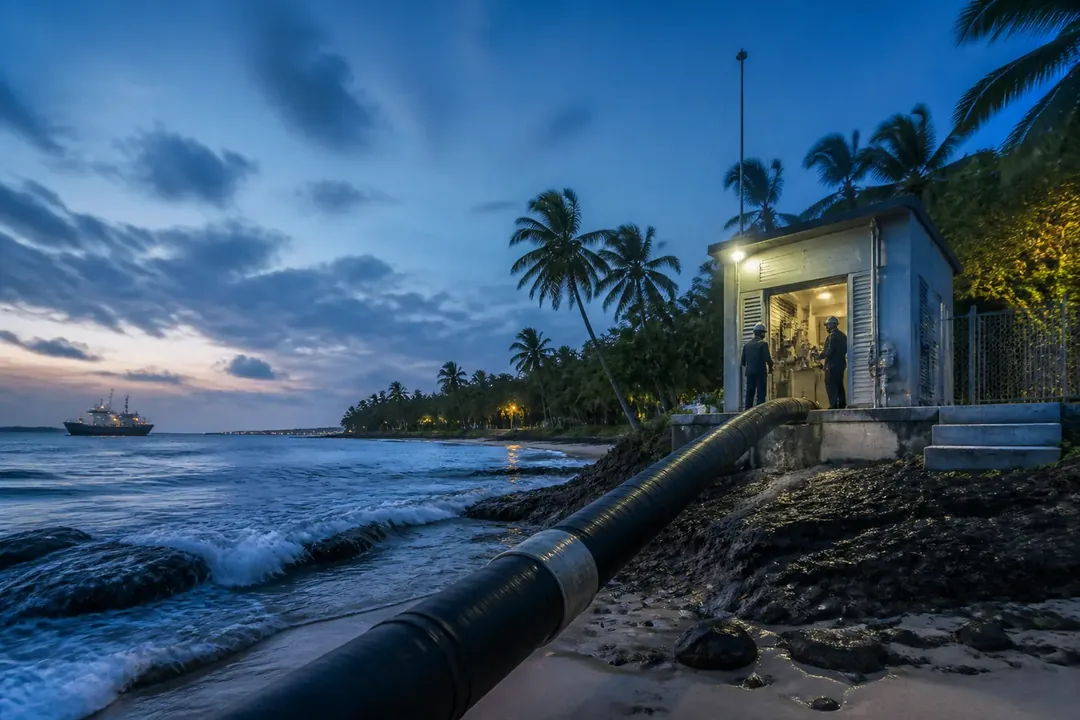
Subsea cables: why island data takes the long way
A cable links Guyana and Trinidad, yet traffic still detours through the US. Why it happens, which new cables are planned and what it means for you.
Internet traffic between French Guiana and Trinidad still travels up to Atlanta and back through Miami, even though a direct undersea cable has linked them since 2024. In the past year, Jamaica and a European cable company both announced new cables to make the region's connections faster and harder to break.
For businesses, this affects how quickly video calls connect, files upload and cloud software responds. It also decides whether one damaged cable can knock a whole island offline.
The cables we rely on
Most Caribbean internet traffic travels on undersea fibre optic cables that land at a few stations on each island.
| Cable | In service | What it connects |
|---|---|---|
| ARCOS-1 | 2001 | An 8,700 km ring with 24 landing points in 14 countries, from Florida through the Bahamas, Dominican Republic and Central America |
| Eastern Caribbean Fiber System (ECFS) | 1990s | The older spine linking Eastern Caribbean islands |
| Deep Blue One | 2024 | 2,250 km linking French Guiana, Suriname, Guyana, Trinidad and Tobago |
Many of these systems are ageing. EllaLink, a cable operator, says many regional cables will be retired by 2031, while traffic grows about 25 percent a year.
A cable between neighbours that neighbours rarely use
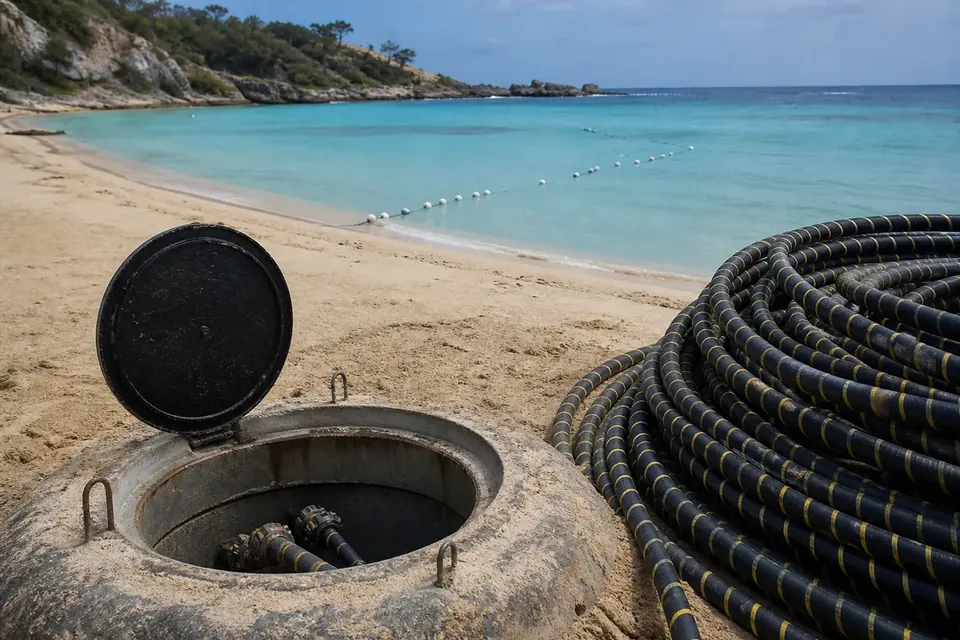
Digicel launched Deep Blue One in mid-2024, with landings at Cayenne, Paramaribo, Georgetown, Chaguaramas and Rockly Bay in Tobago. Orange Marine laid the cable, and each fibre pair carries at least 12 terabits per second.
On paper, that should make traffic between these neighbours very fast. The straight-line distance from Cayenne to Chaguaramas is about 1,200 km, which light in fibre covers in about 12 milliseconds there and back.
In practice, GeoCables measured about 150 milliseconds, more than twelve times slower. A route trace in July 2026 showed why: traffic left French Guiana for Atlanta, crossed the US network, turned around in Miami and only then headed south to Trinidad.
Why traffic takes the long way
Having a cable doesn't mean traffic will use it. Local internet providers have to buy space on the cable and agree to swap traffic directly with each other. For years, the region has bought cheap internet access in Miami. As long as that works, providers have little reason to renegotiate, even when a shorter path exists.
New cables on the way
Jamaica
In February 2026, Jamaica signed a letter of intent with Trans Americas Fiber System for a new cable branch. Prime Minister Andrew Holness said that 54 percent of Jamaica's traffic runs through one cable. That is a resilience risk and, he argued, a reason prices stay high.
The government is putting public money in to lower the risk for investors, but says it does not plan to run the cable itself. Hurricane Melissa's damage to phone networks in late 2025 helped push the decision.
The Eastern Caribbean and the Guianas
In September 2026, EllaLink launched its Caribbean Gateway project. The planned cable would run from Cayenne north to Martinique and Guadeloupe, with service to Suriname, Guyana, Trinidad and Tobago, Barbados, St Vincent, Grenada, St Lucia and Dominica, plus a branch to Aruba, Curaçao and Bonaire.
It would give the region direct routes to Europe, Brazil and North America. The target is to be in service by the end of 2029, but EllaLink still has to turn letters of intent into firm deals and finish its financing.
Why computing still leaves the region
Even with better cables, most heavy computing happens abroad. Cloud data centres and AI chips sit mainly in the United States, and the software tools are built around them.
Electricity is the other barrier. Running servers around the clock needs cheap, reliable power. Trinidad and Tobago's gas-fired grid is an advantage there, as our energy post explains, but many islands still rely on expensive imported fuel.
What this means for your business
- If you move large files, test your upload speed at different times of day and schedule big transfers overnight.
- If you buy internet service, ask providers how many cables they use and what happens if one is cut.
- If you use cloud software, choose a data centre region close to the US east coast, since that is where most Caribbean traffic goes anyway.
What to watch
Watch for independent measurements showing traffic finally taking direct routes on Deep Blue One. Watch for Jamaica's new cable to move from letter of intent to construction, and for EllaLink to sign firm deals with landing countries. When a provider claims faster regional speeds, ask for test results, not just an announcement.